
Metadata-first
Define structure once and generate UI, APIs, and validation from the same source of truth.
EmuFramework generates forms, lists, navigation, permissions, and APIs so your team can focus on business rules instead of boilerplate.
RunApp.cmdDefine App → Model → Entity → Fields → Page → Navigation in one guided flow.
Download the latest release, extract it, and launch the guided setup. The required toolchain is prepared automatically.
github.com/emu479p01/emu-framework/releasesRunApp.cmdhttp://localhost:3399Core capabilities share the same metadata, keeping UI, APIs, and authorization aligned.
Define structure once and generate UI, APIs, and validation from the same source of truth.
Create Apps, Models, Tables, Forms, Views, and Charts in the browser.
Layer App Access, Roles, Duties, and Privileges for precise authorization.
Use reporting, CSV import/export, declarative Views, and the Power BI View API.
Add Scripts, Functions, hooks, and data events for business logic.
Keep installation simple with SQLite plus Windows and Docker workflows.
Real screens from the demo environment show the application workspace, generated list, and advanced metadata designer.
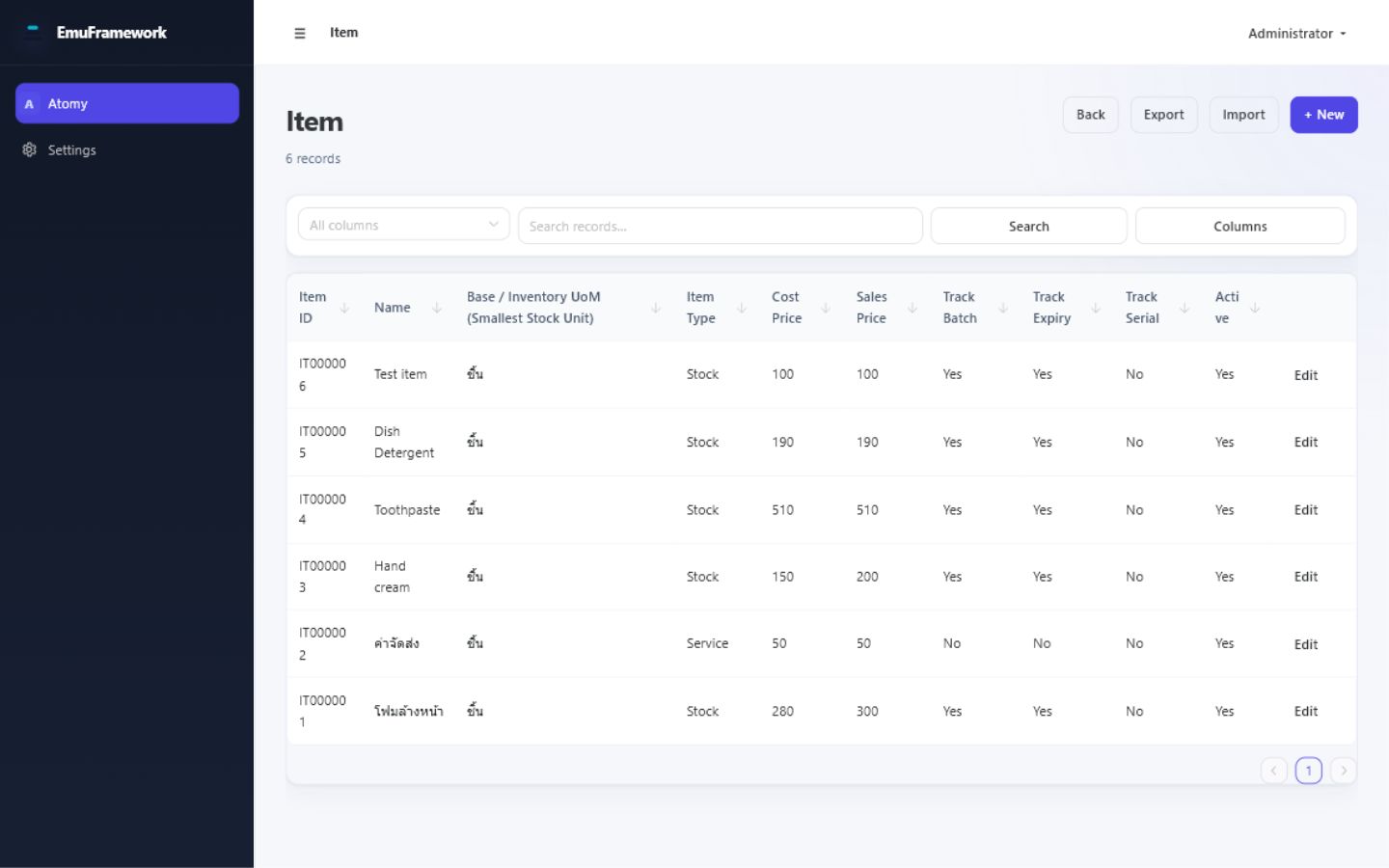
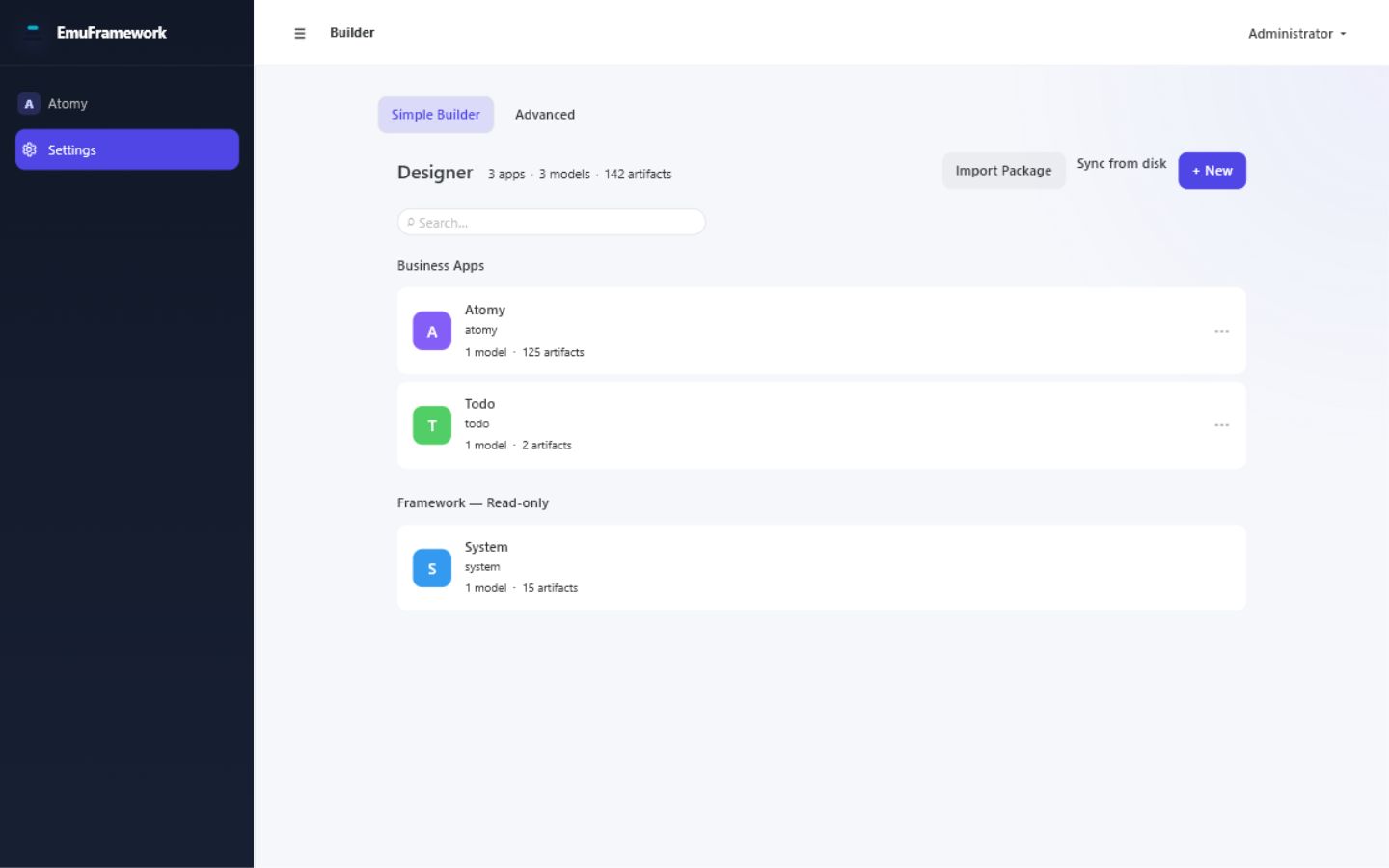

@emu/coreMetadata registry, database, security, and business logic@emu/serverFastify APIs and system services@emu/clientVue application and browser-based Designer@emu/cliScaffolding for Apps and metadata@emu/mcpAI development integrationThe EmuFramework Skill lets AI inspect schemas, prepare atomic change sets, and preview impact before apply—without placing secrets in prompts.
Explore the EmuFramework AI Skill →1 inspect capabilities + snapshot
2 prepare atomic change set
3 validate and preview impact
4 human confirms applyStart with the latest release or open the documentation and choose a role-based path.